What is ADHD?
ADHD stands for ‘Attention Deficit Hyperactivity Disorder’. An estimated 1 in 20 of us have ADHD. Our brains work slightly differently. This can be an advantage in some ways or a disadvantage in other ways. This depends on what you are doing at the time and, of course, what your natural talents and abilities are. ADHD is about potential and possibility. ADHD is one of a group of learning differences – this is what we call ‘Neurodiversity’. ADHD is a neurodevelopmental condition. It encompasses various differences in how we understand information from the world around us. It also affects how we learn.
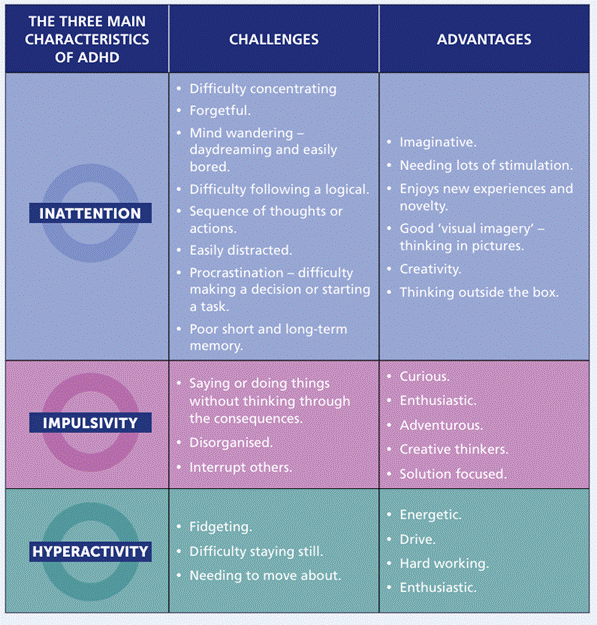
What are the problems young people might experience?
- Executive functions: a set of thinking skills that include organisation, self-control, self-monitoring, working memory, time management, flexible thinking and planning.
- Working Memory: sometimes called short-term memory, is the mental workspace where you hold and organise information for a brief time.
- Inhibition Difficulties: difficulty with avoiding distractors and generally controlling responses (e.g., gets distracted by noises outside, struggles to stop and think before speaking/taking action, finds it hard to wait their turn)
- Understanding and managing our emotions: Learning to understand and control how we feel is tough for every teenager. ADHD can make emotional regulation even more difficult.
How to help Teens
Managing ADHD is about playing to your natural strengths and abilities. Everyone is good at some things and everyone struggles with other things. Making mistakes is an important part of learning! Sometimes we can all be discouraged and fed up. We feel this way when we keep making the same mistakes. We need to learn how to overcome difficulties in a smarter way. You can develop strategies. Find clever tools like assistive technology. These help you overcome tasks and parts of daily life that ADHD can make more challenging.
Emotional regulation is a key executive functioning skill, so how we do controls how we feel
- 5 top tips for helping manage your emotions
1. Maintain good physical health. Get plenty of sleep. Eat a nutritious diet. Avoid a diet with too many carbohydrates. Exercise every single day.
2. Discuss your feelings with an older trusted adult, such as a school counsellor, parent, or teacher. They can help you understand yourself and stay focused on what you want to achieve.
3. Develop daily habits of self-care. For example, practice stress reduction strategies that make you feel well. Try five minutes of slow deep breathing four times a day. You can do this on the school bus, walking, or even during class. Other strategies include mindfulness, yoga, progressive muscle relaxation or a hobby that has a calming effect on you. Learn to spot the signs in yourself when you are feeling stressed, tired or overwhelmed and act on them. Understand your triggers – what makes you feel anxious or angry? Think about ways to distract yourself or extract yourself from difficult situations. This will enable you to become resilient, stay calm and cope in general.
4. Devise a daily and weekly routine and stick to it. Having structure in your life can reduce a lot of anxiety when trying to juggle conflicting demands on your time.
5. Relationships impact on our feelings and help us to stay connected with others. Make time to socialise and nurture your key friendships, including family members. Be creative in finding ways to spend quality time together. Appreciate all the people in your life and tell them so
As you move into secondary school or college, there are more demands on you as a student. You have more teachers and subjects. These demands include being able to organise your work and plan your time successfully.
- Managing school or college work -9 ways that you can support your planning, organisation and memory
1 Ask for help. Do not leave work undone or miss deadlines. Let your parents/carers and teachers know exactly where you are up to. It can be difficult, at times, to ask for help from teachers. It may be worth talking this through with your parents/carers and rehearsing the first few lines of the conversation. Also, imagine a close friend was having difficulties with their work in school. What would you say to them? What advice would you offer and apply your advice to yourself.
2 Use the evening before to get ready. When you wake up in the morning, you might still feel tired. You have to shower, have breakfast, and leave the house in time to catch a bus or train. This is not always the best time to organise yourself for the day ahead. Preparing yourself during the evening before will help you to start the day feeling less stressed and anxious as well. Create an evening routine, including time for homework, sorting out school uniform and packing your school bag. Write your routine down as a check list and hang on your bedroom wall to check each evening. Do the same in the morning for a final check before you leave. Hang this near to the door.
3 Set reminders Use your phone or PC to set reminders of homework to be done, equipment to pack in your school bag and set another timer 15 minutes before you leave the house in the morning as a final reminder
4 Create your own office or workspace Find a space at home that suits you. Remember to avoid as much distraction as you can. Try to avoid the following if you can: Near windows or close curtains/blinds before you start working. Near to a heater. Away from a television or other computers/ screens or ensure, they are switched off before you start working. If you share a bedroom with a brother or sister, negotiate quiet times for school work or use headphones to reduce noise. Leave your phone in another room before you start working. Ideas for a clutter-free workspace: Use boxes or drawers to store stationary and schoolbooks etc, so that your work surface can be clear at all times. Label folders clearly and use different colour labels for each subject. Alphabetise books and folders if they are on shelves. Create an admin folder for everything that doesn’t belong in a specific subject folder. Schedule time once a week to tidy and sort your home office or workspace. Tidy up the workspace after each evening, so you start the next day again with a clear space. Make sure that you know where you can find everything quickly. Constantly searching for resources or equipment can take time and can lead you to become distracted.
5.Set realistic goals for yourself. One of the main reasons people do not achieve goals is improper goal setting from the outset. Goals may be too ambitious, take too long to achieve, or be too general. Setting realistic goals is a starting point and comes with many advantages. Top tips include:
- Clarity – it is important to establish goals that are meaningful and clear to you.
- Motivation – having a choice of goals should increase your motivation for you to succeed. Any goal should include the ability to monitor your progress as you work towards it.
- Start with small, achievable goals for example – saving money for a game. This can help you to work up to bigger and longer-term goals, such as an application for college or a job.
- Look for opportunities to reward and reflect when tasks are completed. This will help you to stay positive and motivated
6. Record what you must remember throughout the school day. Writing down information immediately can help us to reduce stress. It also enables us to plan and prioritise successfully. Use one list not several. This can be done either using a notebook or Apps on the App Store, such as One Note, Notion or Trello. Remember to include:
- Dates or times when pieces of work have to be completed or handed in.
- Sections for school, extracurricular activities and other important information, for example, upcoming birthdays or social events.
- Try checkboxes or writing “finished” next to tasks that you have done.
- A Notes section so you can add extra information to a task as you go along.
- Decide upon a top three each day. The top three are those tasks that need to be done as soon as possible. Prioritising as you go along will help you to get started each day.
7. Keep a reading log Secondary school will involve much more reading every day than in Primary School. This reading can be in several different subjects each day. It will include subject specific vocabulary that is important to remember. Using a reading log can help you remember the range of texts you have read. It also helps you track where you are when you return to reading. Use the sentence starters below as a guide. Answer each one in short sentences. Do this whenever a piece of reading has been completed. This will help with your memory:
- This connects to my life because…
- I wonder…
- This made me think about…
- I didn’t understand… because…
- I really liked… because…
- The top three pieces of information that I have read are..
8 Reward yourself Include in your planning and on your Reminder lists, time to do those activities that you enjoy. Remember to include spending time with your friends as well as exercise and games. This will help you to stay motivated overall. Small rewards, for example, spending twenty minutes gaming or watching television after working for two hours can also be an effective incentive.
9 Investigate assistive technology Give yourself a project to look into Assistive technology. Share this project with a friend or family member. The number of programmes, adaptations and software designed to support young people with ADHD is increasing all the time. You owe it to yourself to find out what is out there, try a few of them and see what would help you. Start by looking at Speech to text (Word) or Text to speech software, Mindmapping programmes and organisational tools for your PC and phone – such as Pomodoro/Promofocus

 Counselling with Aileen
Leave a comment